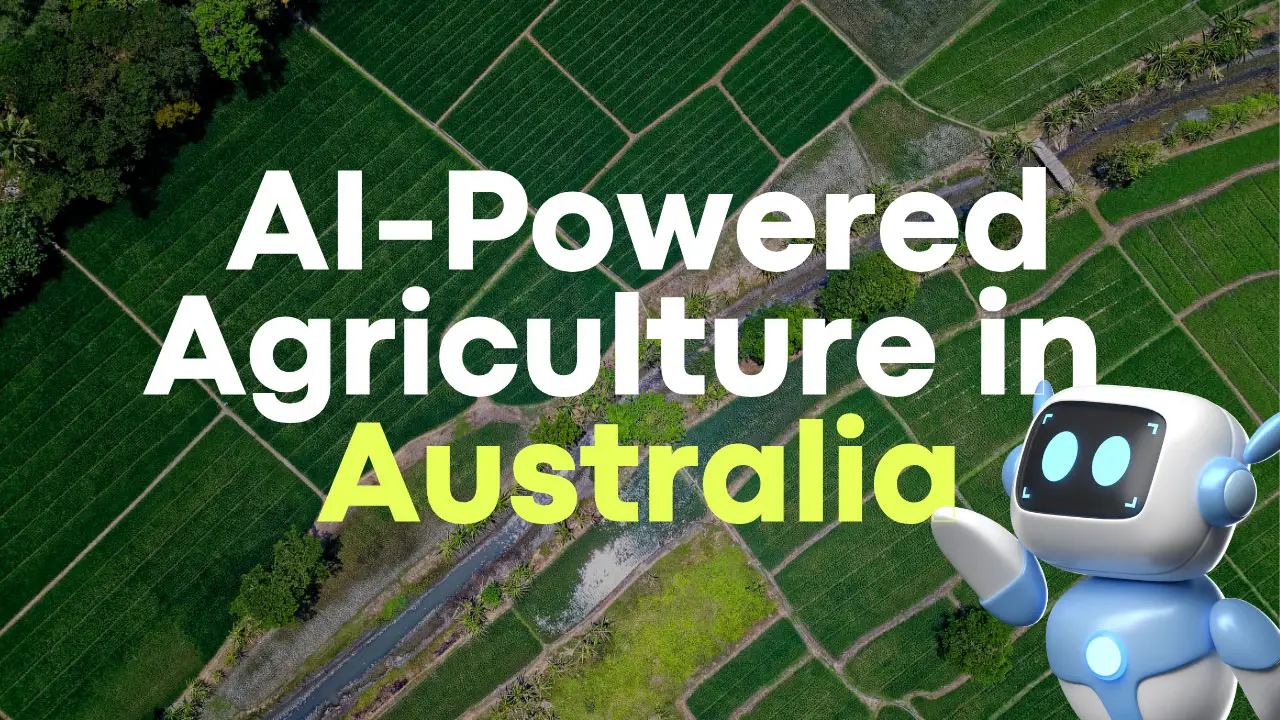
How AI Agriculture Software Is Transforming Australian Farms and Packhouses in 2026
Australian farmers lose an estimated 10–20% of total horticulture production value to post-harvest inefficiencies every season: spoilage, manual grading errors, disconnected data, and delayed decision-making between the paddock and the pack house. AI agriculture software is changing that picture.
Across the country, growers and pack house operators are replacing guesswork with data-driven precision. At Savvy Brains, we work with Australian agriculture businesses to build custom AI-powered platforms that connect farm operations end-to-end, delivering better yields, less waste, and stronger export compliance.
What Is AI Agriculture Software?
Australian farmers lose an estimated 10–20% of total horticulture production value to post-harvest inefficiencies every season: spoilage, manual grading errors, disconnected data, and delayed decision-making between the paddock and the pack house. AI agriculture software is changing that picture.
Across the country, growers and pack house operators are replacing guesswork with data-driven precision. At Savvy Brains, we work with Australian agriculture businesses to build custom AI-powered platforms that connect farm operations end-to-end, delivering better yields, less waste, and stronger export compliance.
Key capabilities in modern AI agriculture platforms include:
- Real-time crop health monitoring using sensors and satellite or drone imagery
- Predictive pest and disease detection before visible damage occurs
- Smart irrigation recommendations based on soil, weather, and crop stage data
- Yield forecasting to align harvest timing with packhouse and logistics capacity
- Automated grading and quality control in packhouse operations
- Full paddock-to-packhouse traceability for compliance and export documentation
The difference between a standard farm app and an AI-powered platform is whether the system tells you what the data means—not just shows you the numbers.
Empowering Farms and Packhouses with Intelligent Insights for Efficiency, Quality, and Scale
Efficiency doesn’t stop at harvest. Once produce leaves the field, packhouse operations play a critical role in maintaining quality and profitability. Manual processes, disconnected systems, and poor visibility often result in delays, waste, and inconsistent grading.
The best agriculture apps provide a single, integrated view of farm and packhouse operations. These platforms help businesses:
- Align harvest timing with packhouse capacity
- Improve grading, sorting, and storage decisions
- Reduce downtime and operational bottlenecks
- Maintain consistent quality standards
For growing agribusinesses, scalable agriculture software solutions ensure that operations can expand without adding unnecessary complexity. This is especially important for Australian producers supplying both domestic and export markets.
Key Challenges Facing Australian Agriculture Today
Before evaluating AI farming technology, it helps to map the challenges it is most directly addressing. Australian agriculture operates across vastly different climates, crop types, and supply chain structures, and technology needs to reflect that reality.
Climate Variability and Extreme Weather
From drought across the Murray-Darling Basin to cyclone risk in tropical north Queensland, Australian growers face some of the most variable growing conditions in the world. AI tools that integrate BOM weather data, soil moisture telemetry, and historical crop performance enable proactive decisions, adjusting irrigation or harvest windows days in advance rather than reacting after the fact.
Labour Shortages Across Harvest and Packhouse
Labour availability remains one of the most persistent constraints in Australian horticulture. Packhouses in particular face high-volume, time-sensitive grading and sorting that is heavily reliant on manual labour. AI-powered automation in grading lines and harvest scheduling directly reduces dependency on peak-season labour availability, a structural advantage, not just a cost saving.
Export Compliance and Traceability Requirements
Australian produce exporters face strict requirements from markets including Japan, South Korea, the US, and the EU. Full chain-of-custody traceability from paddock inputs to cold-chain handling is now a baseline expectation. Fragmented paper or spreadsheet-based record-keeping creates risk and audit gaps that can jeopardise export accreditation.
Post-Harvest Waste and Cold Chain Inefficiency
Post-harvest losses in Australian horticulture are estimated at 10–20% of total production value depending on the commodity. Poor storage decisions, misaligned harvest-to-packhouse timing, and inadequate temperature monitoring throughout the cold chain are the most common contributors, all of which integrated AI platforms directly address.
How AI Solves These Challenges: Four Core Application
1. Crop Health Monitoring and Pest Detection
Computer vision models trained on crop-specific imagery can now identify early-stage disease and pest pressure with accuracy that rivals that of experienced agronomists, and do so continuously across entire paddocks without physical scouting.
For citrus growers, AI models flag early signs of citrus greening or brown rot from drone imagery before visible symptoms appear on fruit. For grape growers, the risk of powdery mildew and botrytis can be modelled using weather data, canopy microclimate readings, and historical spread patterns.
- Earlier intervention reduces spray costs and preserves yield quality
- Automated alerts to agronomists trigger timely on-site verification
- Historical pest maps inform block management decisions the following season
2. Smart Irrigation and Soil Management
Water efficiency is critical across most Australian growing regions. AI irrigation platforms integrate soil moisture sensor networks, evapotranspiration models, and crop water-use coefficients to deliver precision recommendations targeting the right zone at the right time without over-applying.
In drought-prone regions, this approach consistently delivers water savings of 15–30% compared to schedule-based irrigation while maintaining or improving crop quality. For perennial crops such as almonds, table grapes, and avocados, this directly affects input costs and long-term soil health.
3. Yield Prediction and Harvest Planning
Accurate yield forecasting is the backbone of efficient harvest planning. AI models that combine historical yield data, current crop imagery, weather forecasts, and growth stage tracking produce reliable harvest volume estimates weeks aheahead,iving growers and packhouse managers time to align labor, cold storage, and transport capacity.
- Reduce idle packhouse capacity during slow harvest periods
- Prevent bottlenecks when multiple blocks hit peak maturity simultaneously
- Improve contract fulfilment confidence for retailer and export customers
4. Packhouse Automation and AI Quality Grading
AI-powered grading systems use machine vision cameras and weight sensors to assess each piece of fruit or vegetable against defined quality specifications size, colour, shape, and defect presence at speeds and consistency levels that manual grading cannot match.
For operations supplying premium domestic retailers or export markets, consistent grading means fewer customer rejections, less downgrading to secondary markets, and stronger average return per bin. The grading data also feeds back into paddock management, identifying which blocks consistently produce premium-grade fruit and which need agronomy attention.
Connecting Farm, Agronomy, and Packhouse Data: Why Integration Matters
One of the most overlooked problems in agricultural technology adoption is data fragmentation. Most farms today use three to five separate systems: a weather platform, an irrigation controller app, a spray diary, a packhouse management tool, and a compliance record system and none of them talk to each other.
The result is that data exists, but insight does not. A packhouse manager cannot see which paddock is yielding below expectation. An agronomist cannot connect a spray recommendation to a quality outcome at grading. A farm manager cannot run a season-end cost-per-bin analysis without manually consolidating from multiple sources.
Savvy Brains builds integrated AI agriculture platforms that connect all of these data streams into a single operational view, enabling:
- Real-time visibility from paddock through to dispatch
- Faster response to agronomy recommendations with outcome tracking
- Automated compliance documentation for food safety audits and export markets
- Full traceability for any quality issue, traceable to block, date, and input history
This connected approach supports compliance with Safe Food Queensland, Freshcare, GlobalG.A.P., and Hort Innovation requirements all of which increasingly expect digital, auditable records.
What to Look for in an Agriculture App Development Partner
Choosing the right development partner is as important as choosing the right technology. Agri-tech is a specialist domain; a team that builds great SaaS tools for finance or retail will not automatically understand the operational rhythms of a harvest-season packhouse or the compliance obligations of a Freshcare-certified grower.
Here is what to look for and what sets Savvy Brains apart:
Deep understanding of agri-specific workflows
The discovery phase should feel like an agronomist consultation, not a software intake form. The Savvy Brains team asks about your crop calendar, packhouse throughput, labour model, and compliance requirements, not just your feature list.
Experience with Australian compliance frameworks
Your platform needs to support Freshcare, GlobalG.A.P., or state-based food safety requirements from day one. Savvy Brains builds compliance in from the architecture stage, not as a retrofit.
Hardware and IoT integration capability
AI platforms are only as good as the data feeding them. Savvy Brains has experience integrating with soil moisture sensors, weather stations, packhouse camera systems, and cold chain monitoring devices, not just building software interfaces.
A phased, agile delivery approach
The best development teams deliver core functionality in 8–12 weeks, then iterate based on real operational feedback through the season. Savvy Brains uses agile methodology, so your team starts seeing value before the full build is complete.
Transparent costs and long-term partnership
Agriculture is a long-term business. Savvy Brains thinks about your platform in year three and year five, not just the initial build. Our clients receive transparent pricing, clear roadmaps, and a development partner who understands the seasonal nature of their business.
There are a growing number of off-the-shelf agriculture software platforms available in Australia. Some are well-designed for specific use cases. But for operations that span both farm and packhouse, have unique crop or regional requirements, or need to integrate with existing ERP or logistics systems, generic tools often fall short
Feature | Off-the-Shelf Software | Savvy Brains Custom-Built Solution |
Tailored for Australian crops & climate | Generic defaults | Fully customised |
Integration with existing farm systems | Limited or paid add-on | Built-in from day one |
Scalability as your operation grows | Rigid subscription tiers | Scales with you |
Ongoing support & iteration | Vendor ticketing queue | Direct development partner |
Total cost over 5 years | Often higher due to licenses | Better long-term ROI |
Compliance with Australian regulations | May require workarounds | Designed for local rules |
The economics of custom development have also shifted. With modern development frameworks and a local Savvy Brains team that understands Australian agriculture, a tailored platform can be built faster and at lower cost than many operators expect, without the annual licence escalation that erodes the ROI of SaaS tools over time.
Frequently Asked Questions
How much does a custom AI agriculture app cost in Australia?
Costs vary based on scope, integrations, and complexity. The Savvy Brains team works with growers and packhouse operators to scope solutions that deliver ROI — most operations recover their investment within 12–24 months through waste reduction and efficiency gains. Contact Savvy Brains for a free scoping consultation.
Can small farms benefit from AI agriculture software?
Absolutely. Savvy Brains builds modular platforms that small and mid-sized farms can adopt one capability at a time starting with irrigation management or crop monitoring, then expanding as the operation grows. You do not need to be a large corporate farm to see measurable results.
How long does it take to build a custom farm management platform?
Savvy Brains typically delivers a core platform with key integrations within 3–6 months using an agile development approach. Core features are available early, with additional modules built iteratively so your team can start seeing value within the first season.
What crops and regions is AI agriculture software best suited for?
Savvy Brains has experience building platforms for horticulture (citrus, mangoes, grapes, berries), broadacre grain, and mixed operations. Solutions are calibrated for Australian conditions whether you are managing drought-prone inland blocks or tropical north Queensland orchards.
Is our farm data secure on a Savvy Brains platform?
Yes. Savvy Brains designs custom platforms with full data sovereignty Australian-hosted infrastructure, role-based access controls, and compliance with Australian privacy legislation. Your operational data stays yours, unlike many offshore SaaS tools.
Ready to Build Smarter Operations From Farm to Packhouse?
If you are managing a horticultural or broadacre operation in Australia and want to reduce post-harvest losses, connect your farm and packhouse data, or build a custom AI platform tailored to your crops and climate, Savvy Brains would love to understand your operation.
Savvy Brains is an Australian software development company with a track record of delivering practical, scalable solutions that create real results in the field, not just technology for its own sake.